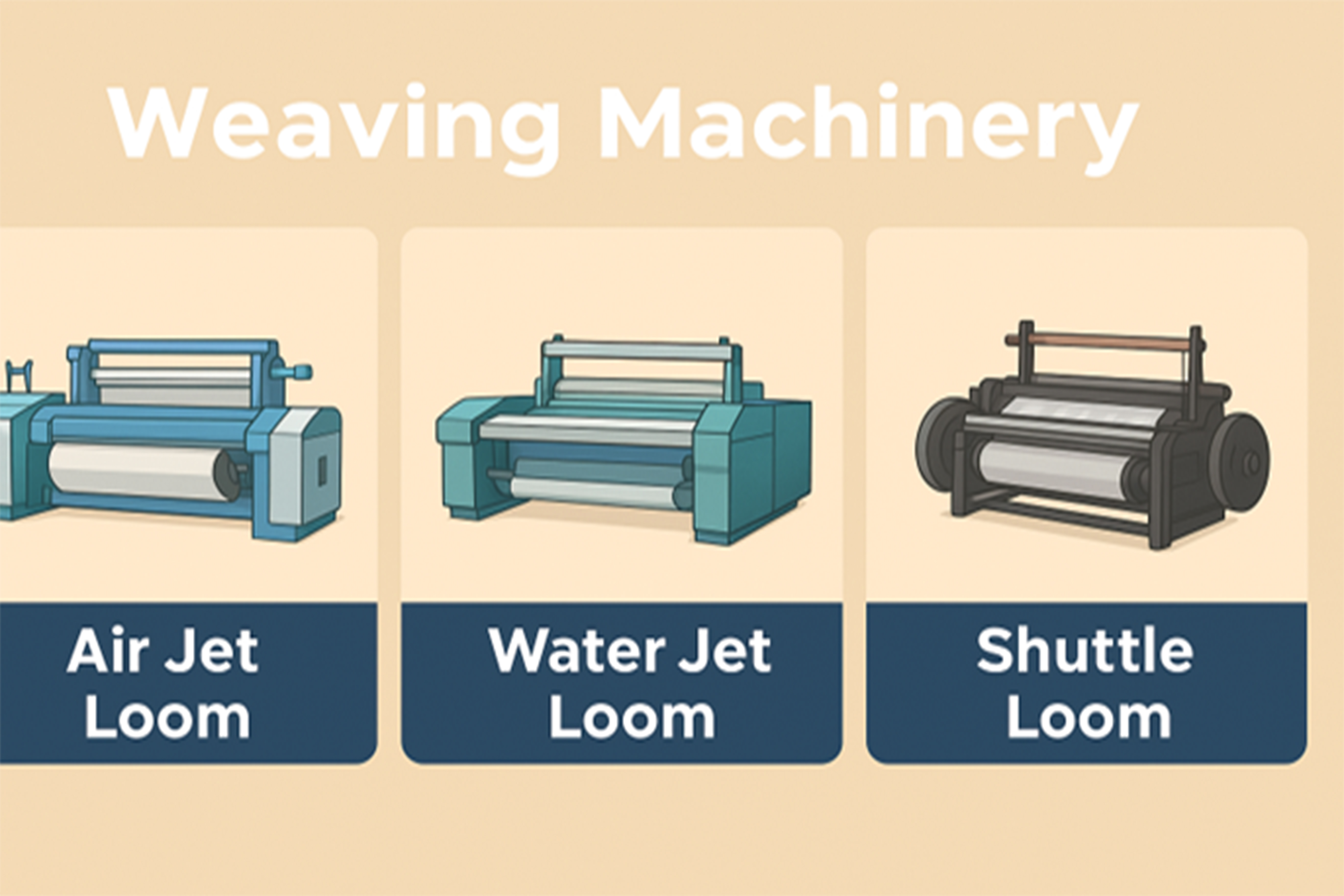
In the dynamic world of textile manufacturing,weaving machinery stands as the heartbeat of production transforming yarn into fabric with precision, efficiency, and consistency. From the rhythmic movement of shuttle looms to the lightning-fast jets of modern air and water looms, weaving technology has advanced beyond imagination.
Today’s textile industries demand speed, versatility, and energy efficiency and weaving machinery has evolved to meet exactly that. In this blog, we’ll explore what weaving machinery is, how it works, types of weaving machines, their applications, technical insights, and how the latest innovations are shaping the future of textiles.
Weaving is the process of interlacing two sets of yarns warp (lengthwise) and weft (crosswise) to produce woven fabric. The machine that performs this interlacing operation is known as a weaving loom.
A weaving machine automates the entire process: controlling warp tension, inserting the weft yarn, and beating the fabric evenly all at incredibly high speeds. The precision and speed of modern weaving machinery determine the texture, density, and strength of the fabric, making them the cornerstone of textile production.
Weaving technology has travelled a long path from manual wooden looms operated by artisans to computerised high-speed looms that can produce hundreds of metres of fabric per hour.
This evolution not only revolutionized production speed but also enhanced the quality and uniformity of woven fabrics across industries.
At its core, every weaving machine performs three primary motions:
1. Shedding: Raising and lowering warp threads to create an opening (shed) for the weft to pass through.
2. Picking: Inserting the weft yarn across the shed.
3. Beating-up: Pushing the newly inserted weft into place using the reed.
Modern looms combine these basic movements with electronic sensors, motors, and automatic systems to allow fast weaving with little help from people.
1️. Shuttle Loom – The Classic Foundation
The Shuttle Loom is the oldest and most time tested form of weaving equipment. It uses a shuttle to carry the weft yarn through the warp shed.
Technical Highlights
Applications
Advantages
2️. Air Jet Loom Speed, Precision & Automation
The Air Jet Loom represents the peak of high speed weaving technology. Instead of a shuttle, it uses compressed air to propel the weft yarn through the shed achieving exceptional speed and efficiency.
Technical Specifications
Key Benefits
Best For
Large scale textile plants producing shirting, suiting, and home furnishing fabrics that demand speed, accuracy, and uniformity.
3️. Water Jet Loom Smooth & Efficient for Synthetic Fabrics
Designed for synthetic yarns such as polyester and nylon, the Water Jet Loom uses a high pressure jet of water to insert the weft yarn. The water provides smooth propulsion, reducing friction and yarn damage.
Salient Features
Applications
Advantages
| Feature | Shuttle Loom | Air Jet Loom | Water Jet Loom |
|---|---|---|---|
| Speed | Moderate | Very High | High |
| Yarn Types | Natural & Blended | All Types | Synthetic |
| Energy Use | Low | Moderate | Low |
| Automation Level | Mechanical | Fully Electronic | Electronic |
| Fabric Quality | Good | Excellent | Excellent |
| Ideal Use | Small mills, traditional fabrics | High-speed production | Synthetic fabric weaving |
1. Automation & Smart Control:PLCs and servo motors ensure every fabric roll meets exact density and texture requirements.
2. Energy Efficiency :Modern looms reduce electricity usage by up to 25% compared to older systems.
3. Enhanced ProductivityMachines like the Air Jet Loom produce over 4x more fabric per hour than traditional looms.
4. Zero-Defect Production Electronic warp and weft monitoring systems prevent faults before they appear.
5. Digital CustomizationEasily program pick sequences, fabric designs, and weaving patterns with digital interfaces.
When selecting weaving machinery, consider:
Alcone Tex Engineers provides a full range of looms from traditional shuttle systems to fully electronic jet looms allowing manufacturers to choose a setup perfectly matched to their production goals.
The weaving industry is moving towards smart manufacturing powered by Industry 4.0 technologies:
These developments will make future weaving machines more intelligent, sustainable, and globally competitive.
Weaving machinery has evolved from simple mechanical systems to sophisticated, electronically controlled looms capable of producing thousands of meters of fabric with precision and speed. Whether it’s the reliability of Shuttle Looms, the speed of Air Jet Looms, or the efficiency of Water Jet Looms, each type plays a vital role in the textile ecosystem.
As the textile world continues to modernize, Alcone Tex Engineers Pvt. Ltd. stands at the forefront of innovation manufacturing weaving machines that combine technology, durability, and performance to help textile businesses thrive in a competitive global market.
If you’re planning to upgrade your textile production line or explore advanced weaving machinery for your plant, connect with our experts today.
Contact Us
Copyright © 2026. All rights reserved by Alcone Tex Engineering pvt. Ltd. | Design and Developed By Arsh Infosystems


 Download Brochure